


It’s always easiest when the offending party
makes the first move and apologizes, but
offenders can sometimes be cowardly…or
ignorant to the severity of the offense. If that’s
the case, hold them accountable and bring it
up. One of the worst disservices we can do to
others is fail to confront them with their need to
grow and change. You are not responsible for
their response—but you are responsible to
confront.
Unfortunately the offender may not see a need
for repentance and things may stall out at step
one. But at least you tried and your heart is
free, because you’ve made the one move that
wasn’t dependent on the other person.
makes the first move and apologizes, but
offenders can sometimes be cowardly…or
ignorant to the severity of the offense. If that’s
the case, hold them accountable and bring it
up. One of the worst disservices we can do to
others is fail to confront them with their need to
grow and change. You are not responsible for
their response—but you are responsible to
confront.
Unfortunately the offender may not see a need
for repentance and things may stall out at step
one. But at least you tried and your heart is
free, because you’ve made the one move that
wasn’t dependent on the other person.
3. We’ve reconciled. Why doesn’t it feel the same?—It’s hard to unring a bell! There
could be a variety of factors playing into the new tension in a once comfortable and familiar place.
It could be that you are still dealing with residual emotions of unforgiveness. It could also be that
even though the offender has repented verbally, they are struggling with finding the actions that
will regain your trust.
Rebuilding trust is difficult. The offended must be sure that they’ve wiped the slate clean and aren’
t viewing new actions in light of the past. Meanwhile, the offender must accept the fact that they
have to regain the trust that was once freely given. If the relationship is worth it, you will work for
it!
It is important that all parties have new clearly defined guidelines for expected behaviors. For
example, if the problem was caused by you not returning phone calls or making time for friends,
then you must resolve to return calls within 24-48 hours, rather than weeks down the road. If you
want the relationship, you’ll make the adjustments.
We need clearly defined rules when working our way back! It will keep everyone involved from
slipping into emotional manipulation.
4. Destination Restoration—There’s no set timetable for this stage. It will depend on a
variety of factors within the context of the individual relationships and the offense. However if all
the other steps and stages are not rushed, the time will come when things are better than the way
they were before. Things will be better because the communication and trust built in steps two and
three have made the relationship stronger. Furthermore, having almost lost the relationship will
help you stay focused on its value.
Live It! In his book, Necessary Endings, Dr. Henry Cloud provides these insights, tools and
strategies to moving forward. I wholeheartedly recommend it to anyone making personal or
professional transitions. If you’re not in the market for a new book, I recommend sharing this
article with a friend and simply discussing how they’ve enacted these steps in dealing with offenses
in their own life.
could be a variety of factors playing into the new tension in a once comfortable and familiar place.
It could be that you are still dealing with residual emotions of unforgiveness. It could also be that
even though the offender has repented verbally, they are struggling with finding the actions that
will regain your trust.
Rebuilding trust is difficult. The offended must be sure that they’ve wiped the slate clean and aren’
t viewing new actions in light of the past. Meanwhile, the offender must accept the fact that they
have to regain the trust that was once freely given. If the relationship is worth it, you will work for
it!
It is important that all parties have new clearly defined guidelines for expected behaviors. For
example, if the problem was caused by you not returning phone calls or making time for friends,
then you must resolve to return calls within 24-48 hours, rather than weeks down the road. If you
want the relationship, you’ll make the adjustments.
We need clearly defined rules when working our way back! It will keep everyone involved from
slipping into emotional manipulation.
4. Destination Restoration—There’s no set timetable for this stage. It will depend on a
variety of factors within the context of the individual relationships and the offense. However if all
the other steps and stages are not rushed, the time will come when things are better than the way
they were before. Things will be better because the communication and trust built in steps two and
three have made the relationship stronger. Furthermore, having almost lost the relationship will
help you stay focused on its value.
Live It! In his book, Necessary Endings, Dr. Henry Cloud provides these insights, tools and
strategies to moving forward. I wholeheartedly recommend it to anyone making personal or
professional transitions. If you’re not in the market for a new book, I recommend sharing this
article with a friend and simply discussing how they’ve enacted these steps in dealing with offenses
in their own life.
Breaches, failures and misunderstandings are painful. Lately, as a body, it seems that we are
constantly assaulted with the pitfalls of humanity in ourselves and our leaders...despite the
amazing power of Christ that is always present to change and keep us. Opportunities for offense
and disappointment are endless and once the dust settles from our injured emotions...we wonder,
what next?
It all depends on the response and measures taken to address the breach. Although there is no
simple formula, here are four questions to use to coach yourself through the process:
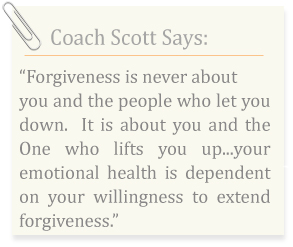
1. When do I forgive?—Simple: Immediately! Focus on the cross, not the offense. For
believers, the cross is the greatest example of undeserved forgiveness. Forgiveness is never about
you and the people who let you down. It is about you and the One who lifts you up. Regardless of
what has happened...your emotional health is dependent on your willingness to extend forgiveness.
Decide that you will not allow the other party's actions to determine your heart's position. They
don’t have to deserve it. It is your responsibility. Forgiveness is a refusal to be tied to a painful
past. Forgiveness is tough, but remember it is a decision not an emotion.
2. I’ve forgiven, now what?—It’s time to reconcile. Here’s the tough part. If there’s no
repentance, then forgiveness might be all there is left of the relationship. To reconcile with
someone means that the issue is addressed and there is a clear opportunity for the offender to
address the issues.
constantly assaulted with the pitfalls of humanity in ourselves and our leaders...despite the
amazing power of Christ that is always present to change and keep us. Opportunities for offense
and disappointment are endless and once the dust settles from our injured emotions...we wonder,
what next?
It all depends on the response and measures taken to address the breach. Although there is no
simple formula, here are four questions to use to coach yourself through the process:
1. When do I forgive?—Simple: Immediately! Focus on the cross, not the offense. For
believers, the cross is the greatest example of undeserved forgiveness. Forgiveness is never about
you and the people who let you down. It is about you and the One who lifts you up. Regardless of
what has happened...your emotional health is dependent on your willingness to extend forgiveness.
Decide that you will not allow the other party's actions to determine your heart's position. They
don’t have to deserve it. It is your responsibility. Forgiveness is a refusal to be tied to a painful
past. Forgiveness is tough, but remember it is a decision not an emotion.
2. I’ve forgiven, now what?—It’s time to reconcile. Here’s the tough part. If there’s no
repentance, then forgiveness might be all there is left of the relationship. To reconcile with
someone means that the issue is addressed and there is a clear opportunity for the offender to
address the issues.







EMAIL:
Quoted as one of today's leading
motivational speakers by ESSENCE
magazine, Leadher Coach Scott™ shares
life-changing truths with practical wisdom,
humor and insight. Currently, a columnist
for StreamingFaith.com, her workshops
and seminars are popular at women's,
singles' and youth conferences. For more
info, also visit feliciascott.com or myspace.
com/upliftagency. Follow her at www.twitter.
com/coachfelicia.
Email Coach Scott:
coachscott@eewmagazine.com
Connect on Facebook
Facebook.com
motivational speakers by ESSENCE
magazine, Leadher Coach Scott™ shares
life-changing truths with practical wisdom,
humor and insight. Currently, a columnist
for StreamingFaith.com, her workshops
and seminars are popular at women's,
singles' and youth conferences. For more
info, also visit feliciascott.com or myspace.
com/upliftagency. Follow her at www.twitter.
com/coachfelicia.
Email Coach Scott:
coachscott@eewmagazine.com
Connect on Facebook
Facebook.com


| BI-WEEKLY COLUMNS |

| ADVERTISEMENT |
| ADVERTISEMENT |




 | |  | |  | |  |

 | |  | |  | |  | |  | |  |
| Copyright © 2011-2014 EEW Magazine. All rights reserved. Reproduction in whole or in part without permission is prohibited. |

get the latest coverage of black news and black entertainment from a Christian perspective.




June 21-July 5
| EEWMAGAZINE.COM |


The other day one of my best friends called
to remind me to call her son—my godson for
his birthday. I laughingly, but seriously, told
her that I don't call small children on their
birthdays. I always picture my call to be an
unwelcome interruption to the excitement of
their day. But, I made the promise to call.
The big day arrived and I kept reminding
myself to call. But at 10 pm, it hit me that I’d
neglected to keep my promise. Knowing he
was well past his bedtime, I called my friend
and left a long winded profuse apology on her
voice mail. She didn't call me back. So, the
next day, I left yet another one proclaiming
myself to be an "unfairy godmother"...still no
call back. I got a little worried. I was
concerned about a possible breach in our
friendship. Having lost my fair share of
friendships over the years, I didn't want to
lose this one. But the next day she called to
reassure me that she understood and we were
“all good.”
to remind me to call her son—my godson for
his birthday. I laughingly, but seriously, told
her that I don't call small children on their
birthdays. I always picture my call to be an
unwelcome interruption to the excitement of
their day. But, I made the promise to call.
The big day arrived and I kept reminding
myself to call. But at 10 pm, it hit me that I’d
neglected to keep my promise. Knowing he
was well past his bedtime, I called my friend
and left a long winded profuse apology on her
voice mail. She didn't call me back. So, the
next day, I left yet another one proclaiming
myself to be an "unfairy godmother"...still no
call back. I got a little worried. I was
concerned about a possible breach in our
friendship. Having lost my fair share of
friendships over the years, I didn't want to
lose this one. But the next day she called to
reassure me that she understood and we were
“all good.”